Why Local AI Is No Longer Optional: The 2026 Sovereign AI Manifesto
Frontier models are getting locked behind government and corporate gates while consumer hardware prices spike. Here's the practical blueprint for building a sovereign, local AI lab before the window closes.
The digital landscape has fundamentally fractured. For the past few years, the prevailing narrative around AI was simple: pay $20 a month to a tech giant, get an API key, tap into near-infinite cloud compute. The cloud was supposed to democratize intelligence.
It didn't.
In a single week in late June 2026, that narrative didn't just crack — it shattered. With the simultaneous announcements of next-generation frontier models like **ChatGPT 5.6** and Anthropic's Fable 5, the trajectory of mainstream AI became glaringly obvious. These models weren't rolled out to the public. Under the banner of national security, the US government intervened, restricting access to a hand-selected group of elite insiders and institutional players.
Consumer tech architecture is simultaneously experiencing an unprecedented price squeeze. Apple just pushed across-the-board 20-25% price hikes on pro-tier hardware. Adding 128 GB of RAM to a custom PC build now carries a thousands-of-dollars premium. Even legacy components and mid-tier gaming consoles are climbing in price rather than depreciating.
The window to establish personal digital sovereignty is closing fast. Within the next 12-24 months, consumer-accessible hardware capable of running high-tier AI locally will likely become either cost-prohibitive or physically unavailable — the result of a massive impending bottleneck: industrial redirection of memory and silicon toward autonomous robotics and drone fleets.
The solution isn't to complain about rate limits or wait for access gates to open. The solution is to build a sovereign, local AI lab. Running models natively on your own silicon is no longer a hobbyist pursuit — it is the single most critical technical capability you can develop today to insulate yourself from institutional control.
Defining Local AI: Breaking the Umbilical Cord to the Cloud
When you type a prompt into a browser targeting a commercial LLM, your data leaves your machine, crosses the open internet, passes through corporate load balancers, and lands inside a hyper-scale data center. Industrial GPUs process the request and stream a response back. In this paradigm, you own nothing and control nothing.
- Corporate Surveillance. Every prompt, every line of proprietary code, every confidential strategy is logged, indexed, and stored on third-party servers. A breach, audit, or policy shift exposes the entire history.
- Algorithmic Censorship. Guardrails are dynamically tuned by trust-and-safety teams. A model that writes brilliant marketing copy or unvetted code today can be heavily nerfed tomorrow morning without warning.
- The Tollbooth Economy. You pay an ongoing tax per interaction. Run continuous autonomous agents and API costs spiral into thousands of dollars a month — turning prototypes into financial black holes.
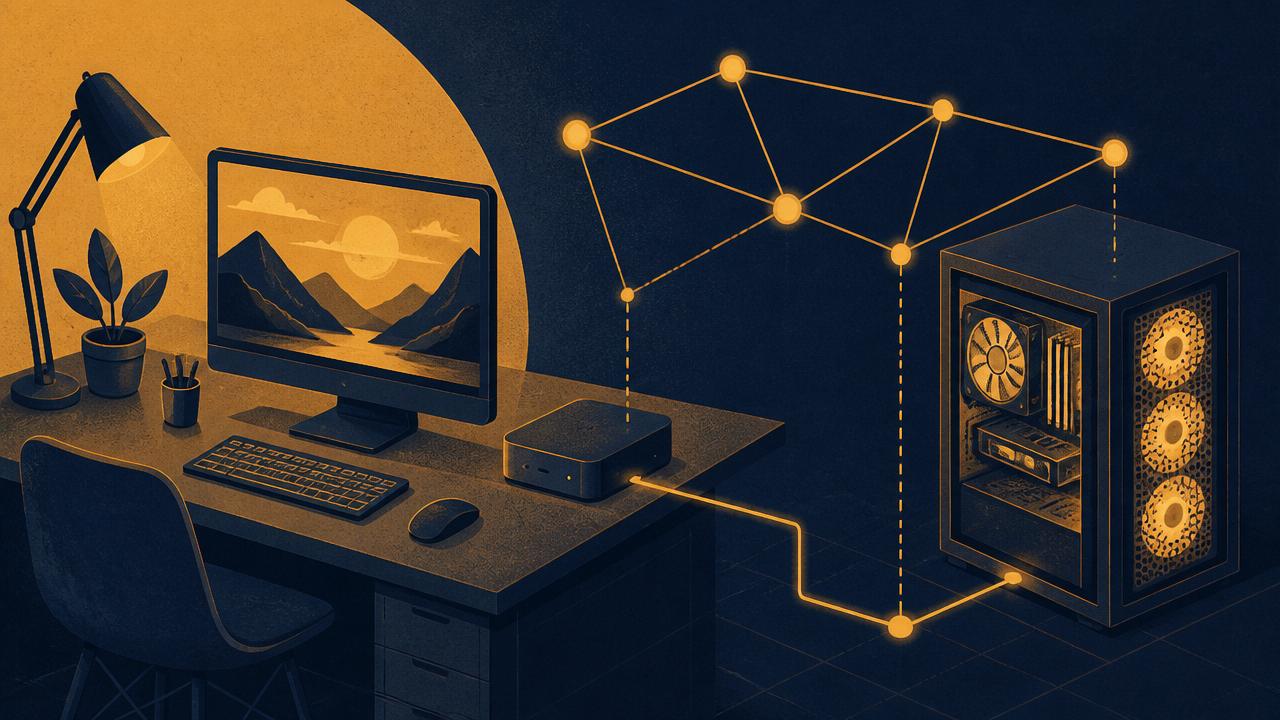
Local AI flips this dynamic. When you run an open-weights model locally, the entire neural network loads into your machine's physical memory (VRAM or unified system RAM). Token prediction happens on your own silicon. You can physically pull the ethernet cable out of the wall and the environment keeps running at full capacity. Your prompts never leave your local bus. Your access can never be revoked by a remote update. That's operational sovereignty.
Addressing the Naysayers: "Aren't Local Models Dumber?"
The standard critique: aren't local models smaller, slower, and fundamentally dumber than cloud behemoths? Historically — accurate. A quantized 7B model on a laptop paled next to an industrial trillion-parameter mixture-of-experts. In mid-2026, that gap has narrowed to a razor-thin margin.
Consider GLM 5.2: fully deployed on local hardware, its analytical capability rivals legacy frontier cloud models like Claude 3 Opus. Ornith 1.0 and Google's Gemma 4 series provide top-tier reasoning, logic, and synthesis at a fraction of the compute footprint their predecessors demanded.
If you're still on the fence about handing automation decisions to any AI, our companion piece AI Isn't Evil, But It Is Dangerous walks through the audit framework before you wire models into anything load-bearing.
The Hardware Blueprint: Selecting Your Architecture
Building a home AI lab does not require $40,000 enterprise server racks, but it does require understanding how different architectures handle neural networks. Models require memory to exist, and how that memory is structured determines performance. Consumer and prosumer hardware splits into four tactical tiers — each presenting a distinct trade-off between capacity (how smart a model you can load) and bandwidth (how fast it can talk).

| Tier | Example Hardware | Memory Profile | Best For | Trade-off |
|---|---|---|---|---|
| High Unified, Low Bandwidth | Mac Studio M-Ultra (up to 512 GB unified) | Massive shared CPU/GPU pool | Loading gargantuan unquantized models (GLM 5.2 at ~250 GB) | Slower token generation — the brilliant but slow professor |
| Medium Unified, Medium Bandwidth | NVIDIA DGX Spark, AMD Halo workstations (~128 GB) | Balanced unified memory + enhanced pipelines | Medium models at speeds matching cloud API streaming | Lacks the top-tier capacity of a maxed Studio |
| Low VRAM, Ultra-High Bandwidth | NVIDIA RTX 5090 (32 GB), RTX 6000 Pro (96 GB) | Discrete VRAM, massive memory bus | Lightning-fast inference, tokens faster than the eye reads | Severe capacity limits; multi-GPU rigs spike power and heat |
| Legacy & Budget | Mac Mini, older gaming desktops, laptops | Whatever you already own | Embeddings, formatting, lightweight helper nodes | Confined to 4B-8B compressed models |
Shopping list: hardware we'd actually buy this quarter
If you want to skip the spec-sheet rabbit hole, these are the Amazon listings that map cleanly onto the four tiers above. Prices and stock move weekly — always sanity-check before committing.
- Tier 1 — Unified Memory Beast: Apple Mac Studio (M-series, max RAM config) for hosting 200GB+ models like GLM 5.2 at usable speeds.
- Tier 2 — Prosumer Workstation: an NVIDIA DGX Spark / AI workstation or a 128GB DDR5 RAM kit to push an existing tower into the medium-unified tier.
- Tier 3 — Bandwidth Monster: the NVIDIA GeForce RTX 5090 for blistering inference on quantized 30B–70B models, paired with a 1000W+ 80+ Platinum PSU so the rig doesn't brown out under load.
- Tier 4 — Legacy & Budget Entry Point: a Mac Mini (M-series, 24GB unified) is the cheapest serious on-ramp; pair it with a 4TB external NVMe SSD to store model weights without choking the boot drive.
- Always-on lab hygiene: a smart power meter / Kill-A-Watt so you actually know what 24/7 inference costs you, and a rack-mount UPS battery backup to keep the mesh alive through outages.
The Software Fabric: Tailscale and Orchestration Agents
Owning individual hardware scattered around your home is only half the battle. The real unlock is linking those machines into a single, unified, intelligent network — without an advanced degree in network engineering.
Tailscale: The Private Overlay Mesh
Tailscale builds a secure, zero-config, encrypted VPN connecting your desktop, Mac Studio, laptops, and even your phone regardless of physical location. Run a smart model on the Mac Studio at home, install Tailscale on your devices, and you can be in a coffee shop across the country routing AI queries directly to your home hardware. Your phone inherits the intelligence of your entire lab without touching a commercial cloud provider.
Hermes / OpenClaw: The AI System Administrator
The historical barrier to local AI was the volume of terminal commands, environment configs, dependencies, and driver conflicts required to swap models. Orchestration layers like Hermes or OpenClaw eliminate that friction. Acting as natural-language operating agents, they function as an automated IT department for your hardware stack:
you> Hey, connect to the Mac Studio, spin down the current model,
      load Quen 36 into memory, and establish an API route so the
      desktop GPU can offload embedding tasks to it.

hermes> ✓ ssh into mac-studio.tailnet
        ✓ graceful shutdown: glm-5.2-q4
        ✓ pulled weights: quen-36-instruct
        ✓ loaded into 178 GB unified memory
        ✓ opened OpenAI-compatible endpoint at
          http://mac-studio.tailnet:11434/v1
        ✓ desktop-gpu now routes embeddings → mac-studio
        ready.
The agent handles code execution, verifies paths, and optimizes allocation across your fabric automatically. If you're already building automations elsewhere, the playbook in Code as an Asset: Desktop Automation Scripts pairs neatly — desktop scripts become the hands of the local model.
Unlocking the Ambient Paradigm: Continuous 24/7 Automation
The killer application of local AI isn't replacing the chat box you use for casual emails. The paradigm shift happens when you realize local compute is unlimited, unrestricted, and effectively free after the hardware purchase.
Cloud models constrain you with rate limits, usage tiers, and per-token costs — you query only when you actively need something. When you own the hardware, you move from on-demand to always-on ambient. Because it costs nothing but a few cents of electricity to run your GPUs at full tilt around the clock, you can deploy fleets of agents that work for you 24/7.
Use Case 1: Autonomous Codebase Security & Database Auditing
For developers and SaaS founders running active platforms, a local agent can be locked inside an isolated loop directly connected to your development environment. It scans your codebase line-by-line for zero-day vulnerabilities, outdated dependencies, and structural flaws. A separate background node monitors database clusters for anomalous traffic, structural errors, and performance bottlenecks. Running this on commercial cloud tokens would cost thousands per month. Locally, it runs silently as a fixed-cost utility.
Use Case 2: 24/7 Market Intelligence and Trend Scraping
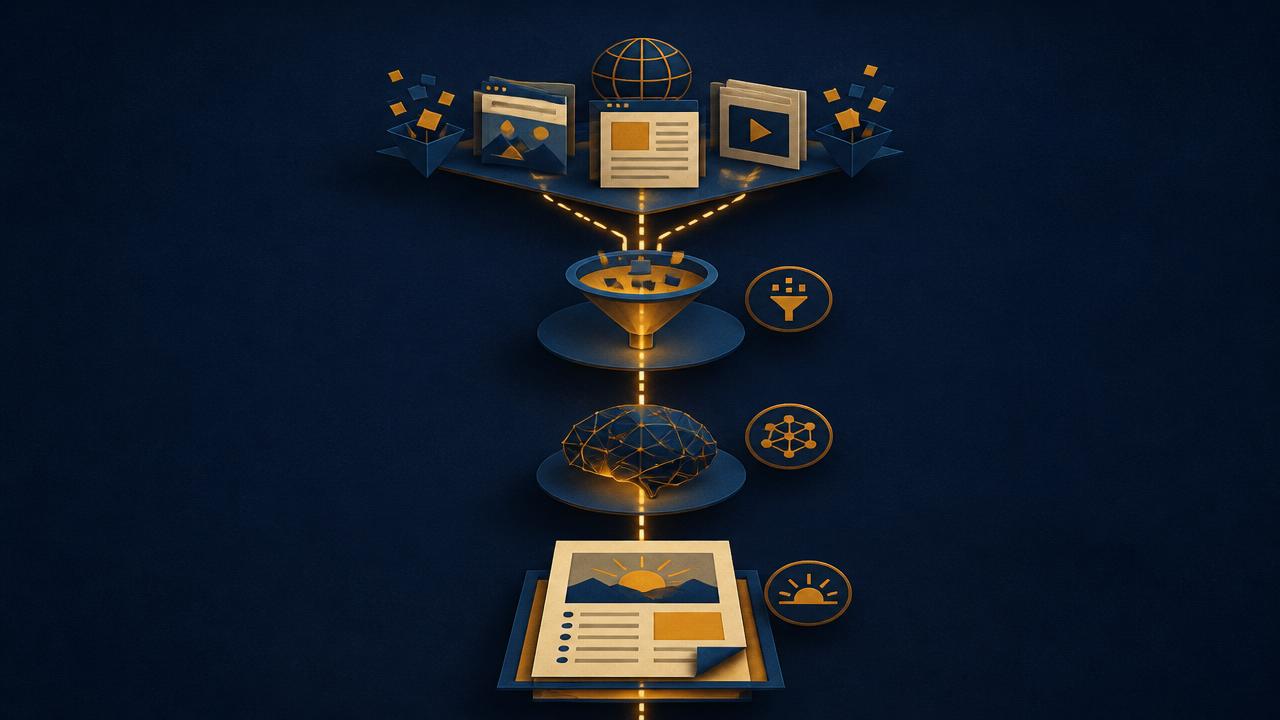
Every twenty minutes, background scrapers pull real-time data from high-intent public forums, social networks, and developer threads. A fast local node strips noise and spam. A larger analytical model (a quantized GLM on a unified memory bank) evaluates the structured text to identify acute consumer frustrations, emerging bugs in popular tools, and gaps in existing services. Every morning, the system compiles and ranks a source-verified report of SaaS opportunities and market shifts.
If you've been wiring this kind of workflow with hosted automation tools, n8n vs Zapier: Why Scaling Teams Are Quietly Killing Their Zapier Contracts lays out why the same logic pushes serious operators off SaaS automation rails. Pair an n8n instance running on a local node with a sovereign model and you've cut your two biggest recurring AI bills in the same week.
The Master Prompt: Audit Your Sovereignty Posture
Paste this into any frontier model (local or cloud) to map your current dependency on commercial AI infrastructure and produce a prioritized migration plan. Fill in the {{VARS}} honestly — the value is in the diagnosis, not the score.
You are a Sovereign AI Infrastructure Auditor. Your job is not to be polite. Your job is to map my exposure to commercial AI dependencies and give me a brutal, prioritized migration plan to a local-first stack.

My context:
- Role: {{ROLE}}                 (e.g. solo founder, ops lead at 12-person SaaS)
- Monthly AI spend (USD): {{MONTHLY_SPEND}}
- Tools I currently rely on: {{TOOL_LIST}}   (e.g. ChatGPT Plus, Claude API, Cursor, Zapier AI steps, Perplexity)
- Workloads I run on AI: {{WORKLOADS}}       (e.g. code review, content drafting, customer support triage, market research)
- Hardware I already own: {{HARDWARE}}       (e.g. M2 Pro MacBook 32GB, RTX 4080 desktop)
- Budget for new hardware in next 6 mo: {{BUDGET}}

Required output, in this exact order:

1. DEPENDENCY MAP
   List every commercial AI service from {{TOOL_LIST}}. For each: what would break in my workflow tomorrow if it was rate-limited, geo-blocked, or shut down.

2. SENSITIVITY SCORE (1-10) per workload
   For each item in {{WORKLOADS}}: how exposed am I to corporate surveillance, censorship drift, or sudden price hikes. Justify the number in one sentence.

3. HARDWARE GAP ANALYSIS
   Given {{HARDWARE}} and {{BUDGET}}, which of the four tiers (Unified-Memory, Prosumer Workstation, High-Bandwidth GPU, Legacy) should I invest in next, and what specific open-weights model would be the first to run on it.

4. MIGRATION SEQUENCE (90 days)
   Week-by-week plan to move my top 3 highest-sensitivity workloads off cloud APIs and onto local infrastructure. Include the orchestration layer (Hermes, OpenClaw, Ollama, LM Studio) and the mesh layer (Tailscale).

5. WHAT STAYS IN THE CLOUD
   Be honest about which workloads genuinely belong on frontier cloud models for now, and the policy I should write for using them.

6. THE 12-MONTH SOVEREIGNTY SCORE
   Project where I'll be on a 1-10 scale (1 = fully cloud-dependent, 10 = fully sovereign) if I execute the plan. Show the math.

BANNED PHRASES: game-changer, unlock, leverage, seamless, transform, empower, ecosystem, future-proof.

If you don't have enough information to score a section, say so explicitly. Do not invent specs for hardware I haven't listed.
The Sovereign Path Forward
The decision to transition into local AI shouldn't be driven solely by economic calculations or raw performance metrics. At its core, building a home AI lab is deeply educational and inherently fulfilling. It forces you to get hands-on with the definitive technology of our generation — the mechanics of compute, the realities of system architecture, the actual boundaries of machine intelligence.
We are sitting in a historically unique, fleeting window. The consumer hardware on shelves right now is still capable of running world-class open-source intelligence locally. As institutional demand scales, as supply chains restrict, and as centralized access points continue to close, the ability for an average individual to buy high-capacity memory silicon will diminish.
When you're ready to stitch a local model into an actual decision-making workflow, the Autonomous Solopreneur AI Board of Directors framework is the cleanest pattern we've shipped. The prompt library has the rest of the building blocks, and Our Picks lists the hardware and tooling we'd actually spend money on this quarter.
Frequently asked questions
- If your business runs on AI — code generation, content production, customer support triage, market research — then yes. Not because cloud is unusable today, but because a single policy change, rate limit shift, or geo-restriction can break a workflow you depend on. Even a single repurposed laptop running a 7B-8B model gives you a fallback that survives cloud disruption.

Written by
Dani
AI Workflow Explorer
Dani writes SoloPrompt AI — a working notebook of copy-paste prompts, low-code automations, and field-tested workflows for solo operators. Equal parts skeptic and tinkerer, Dani road-tests every prompt against real micro-business problems before it ships.